

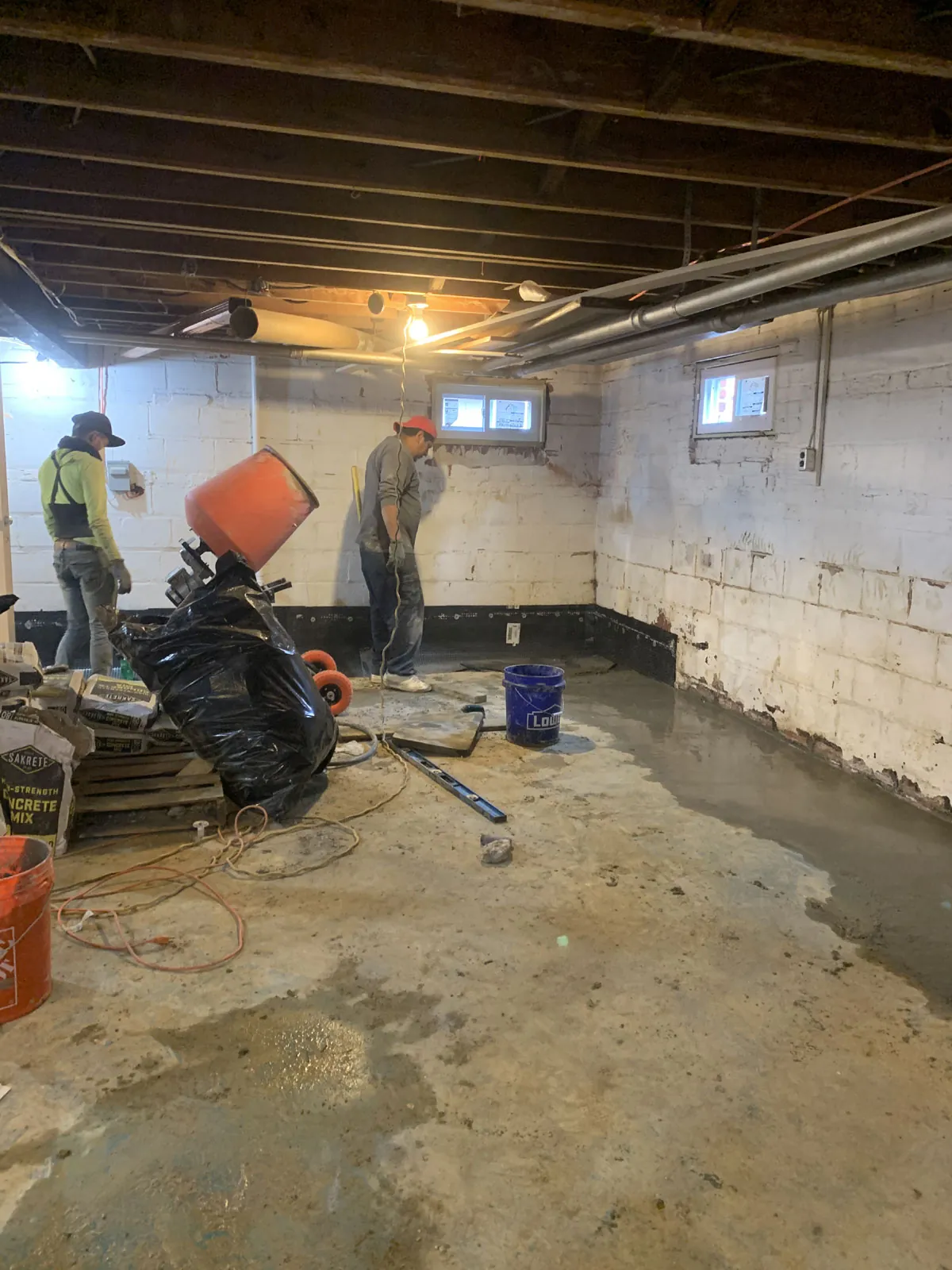
Water in Your Basement Right Now? Here's What to Do
Stay safe, stop the damage from spreading, and get the facts your insurer and contractor will ask for. Then call us during business hours to fix the cause.
First Steps
 First Steps
What to Do, in Order
Work through these from the top. If anything feels unsafe, stop and call the right professional first.
Step 1: Put safety first
Water and electricity are the real danger. If water is near outlets, extension cords, appliances or the electrical panel, do not walk into it.
- Shut off power to the basement at the breaker panel only if you can reach it from a dry spot.
- If you can't reach it safely, call your electric utility.
- If you smell gas, leave the house and call the gas company or 911 from outside.
Step 2: Find where the water is coming from
The source decides what to do next.
- Seeping at the base of a wall or where the wall meets the floor after rain: groundwater or surface water.
- Spraying or dripping from a pipe: close the main water shut-off valve and call a plumber.
- Coming up through a floor drain or toilet: likely a sewer backup. Avoid touching it and call a plumber.
- Rising around the sump pit: the pump may have failed or can't keep up.
Step 3: Check the sump pump
Many wet basements start with a pump that stopped. Never reach into the pit while the pump is plugged in.
- Is it plugged in, and has its GFCI outlet or breaker tripped?
- Is the float switch stuck against the side of the pit?
- Outside, is the discharge line blocked, buried or frozen?
Step 4: Move belongings and limit the spread
Lift documents, electronics and anything you can't replace off the floor. Pull rugs and cardboard boxes out of the water. Once the power to the area is off and the source is stopped, a wet vac can clear shallow water.
Step 5: Document everything for insurance
Before you clean up, take photos and video of the water, where it is coming in and every damaged item. Note the date and time, keep receipts for cleanup costs, and call your insurance company early.
Step 6: Start drying within 24 to 48 hours
Mold can begin to grow within 24 to 48 hours. Run fans and a dehumidifier, remove wet carpet and padding, and move damp items somewhere they can dry.
Step 7: Call us to fix the cause
Once the immediate danger is handled, call us during business hours (Mon–Sat, 8:00 AM – 4:30 PM). We find where the water gets in, fix it for good, and our SD Restorations team can rebuild the finished space.
Call (301) 783-0033
Frequently Asked Questions
Questions After a Wet Basement
Insurance, pumping out water, after-hours help, and keeping it from happening again.
Request an Inspection
Let's Find the Right Solution for Your Home.
Tell us what you are seeing. A professional reviews every request and responds within one business day to schedule an inspection.
- Call(301) 783-0033
- Toll-free1-877-718-SUMP
- Emailcustomerservice@
sumpdaddy.com - Service areaWashington, DC, Montgomery & PG Counties
- HoursMon–Sat, 8:00 AM – 4:30 PM