

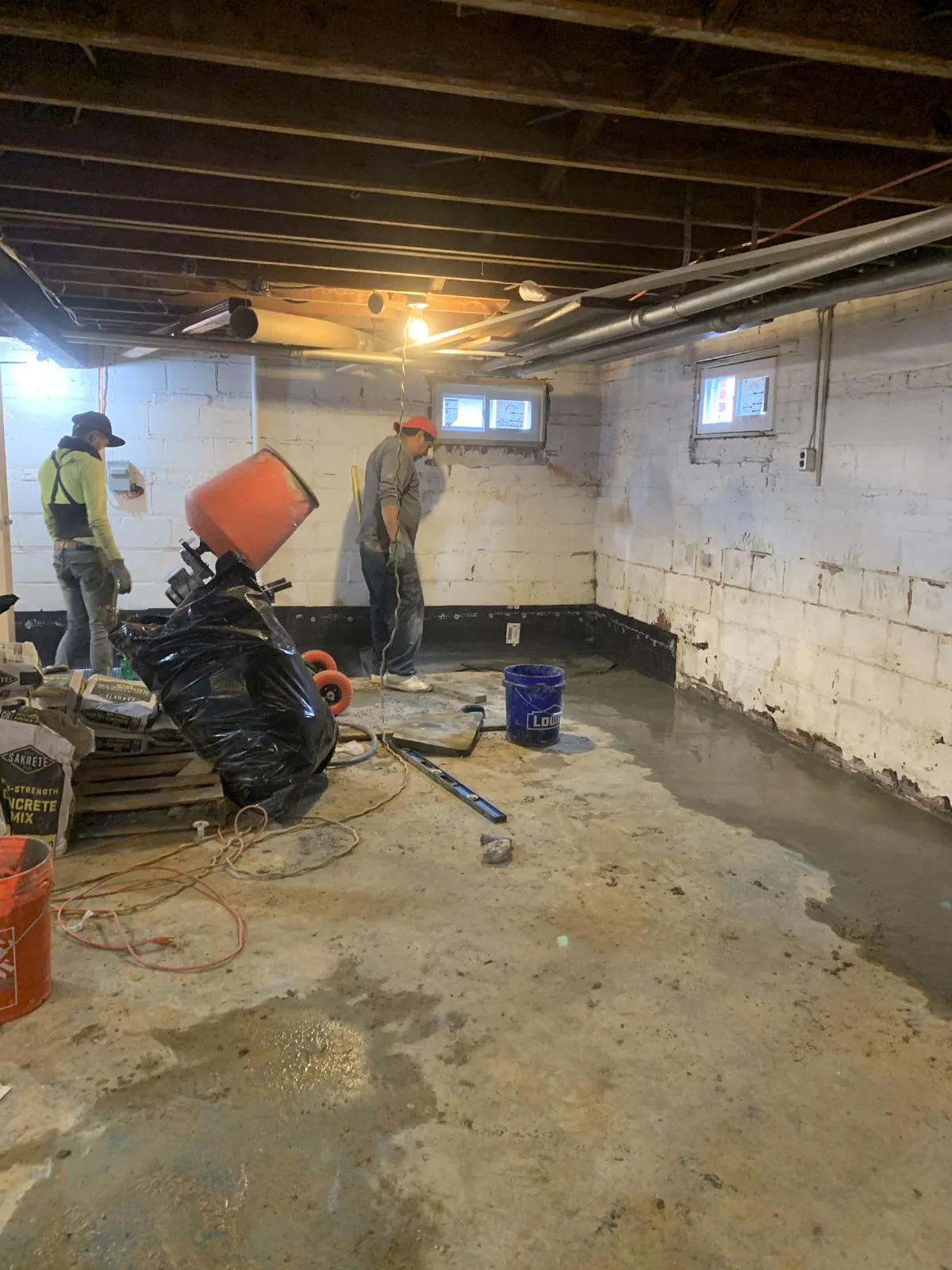

Yard Drainage in DC and Maryland
Water that sits in your yard is not just a lawn problem. Saturated soil next to the house adds weight and pressure to the foundation, feeds basement and crawlspace moisture, and turns a side yard into mud for weeks. In Washington, DC and the Maryland suburbs, dense clay soil drains slowly, lots are tight, and the original grading on older homes has often settled toward the house.
Sump Daddy designs yard drainage as a system, not a product. Depending on your lot that may include catch basins at low points, solid pipe to carry collected water, perforated pipe to pull groundwater out of soggy areas, a dry well or cistern to disperse it where there is no downhill outlet, a swale to steer surface flow, and regrading where the slope is wrong. Downspouts are tied in so roof water goes into the system rather than onto the lawn.
- Licensed in Maryland & DC
- Serving DC & Maryland
- One-business-day replies
- We waterproof & rebuild


Every project begins with a site evaluation: where the water comes from, where it collects, and why it is not leaving. The written estimate shows the layout and the discharge point so you can see how the water will move before we dig.
What the Service Includes
 What the Service Includes
What You Get
Every yard drainage job covers these, priced in writing before we start.
Site drainage assessment
We walk the property during or after rain when possible, identify water sources and collection points, and check slope with a level.
Catch basins and surface drains
Grated basins at low points collect pooling water and heavy runoff and feed it into buried pipe.
Buried drainage pipe
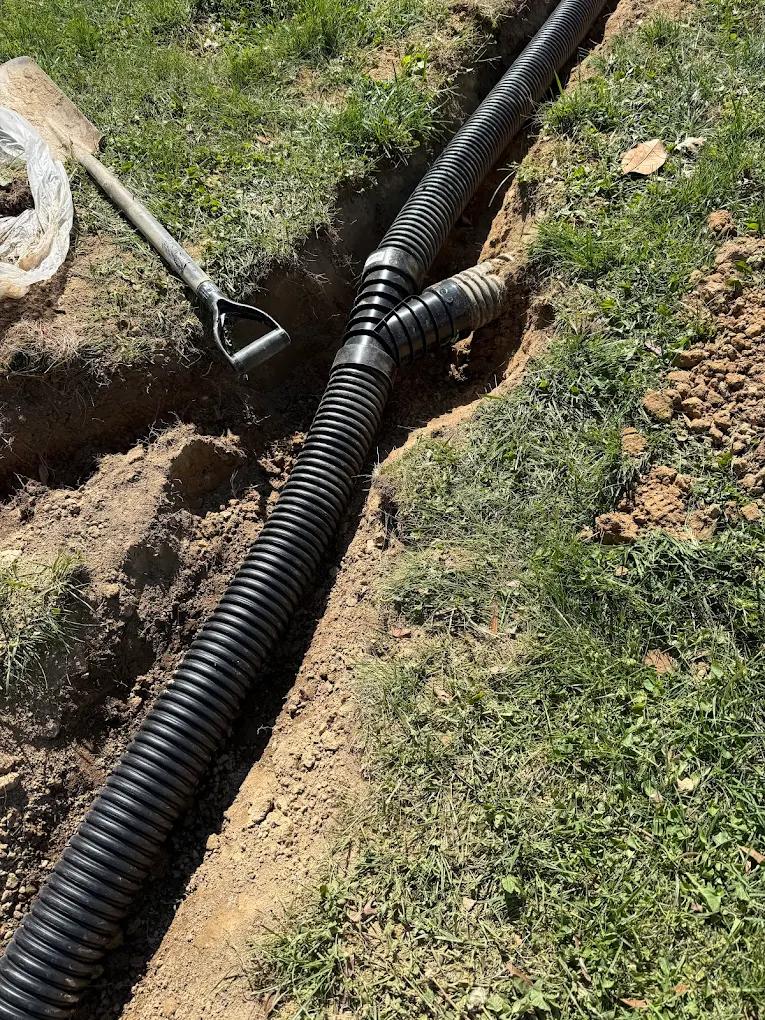
Solid pipe carries collected water to the outlet; perforated pipe in gravel pulls groundwater from saturated zones along the way.
Dry wells and cisterns
Where the lot has no downhill outlet, an underground chamber in gravel stores storm flow and lets it soak into the soil over time.
Swales and regrading
Shallow graded channels and corrected slope move surface water around structures without pipe where that is the simplest answer.
Downspout tie-ins and pop-up emitters
Roof runoff is directed into the system and released through low-profile emitters well away from the house.
Our Approach
How We Handle Yard Drainage
We walk your property during or after rain when we can, because that shows where the water comes from and where it collects. From there we decide which pieces your lot needs: catch basins at low points, solid pipe to carry water, perforated pipe for soggy zones, a swale, or regrading. On flat lots with no downhill outlet, that usually means a dry well sized to the area draining into it.
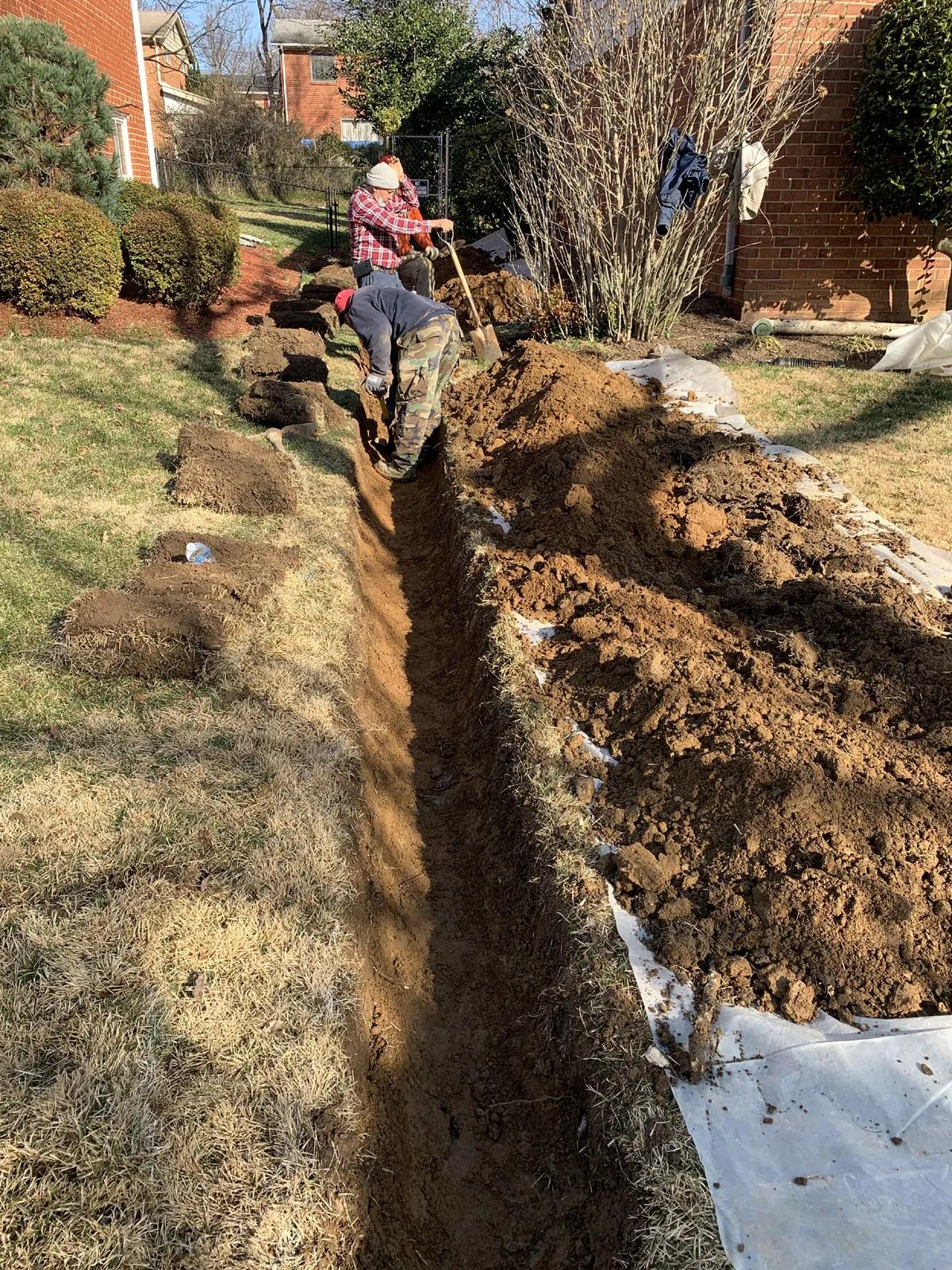
Roof water gets special attention. Downspouts are connected to solid pipe with a cleanout rather than perforated pipe, so the gravel does not silt up. Before trenching, utilities are located and landscaping in the path is set aside where it can be saved. The system is run with water to confirm flow, then trenches are compacted and turf or beds restored. Weather can shift the schedule, and we keep you informed.
Signs You May Need This Service
When to Call About Yard Drainage
- Puddles remain in the same spots for a day or more after rain stops.
- Grass is thin, mossy, or dead in low areas and the ground stays spongy.
- Water pools against the foundation, in a side yard, or at the bottom of exterior steps.
- Mulch and soil wash out of beds and onto walkways during storms.
- Mosquitoes are a problem in summer because of standing water.
- A patio, walkway, or retaining wall is heaving or settling from saturated soil.
- The basement or crawlspace gets damp after rain even though the walls are sound.
How It Works
Our Yard Drainage Process
Step 1: Evaluation
A technician assesses the lot, measures slope, identifies sources and low points, and checks soil conditions and possible outlets.
Step 2: System design and estimate
You receive a written layout showing basins, pipe runs, outlet or dry well location, and any regrading, with warranty terms.
Step 3: Utility marking and trenching
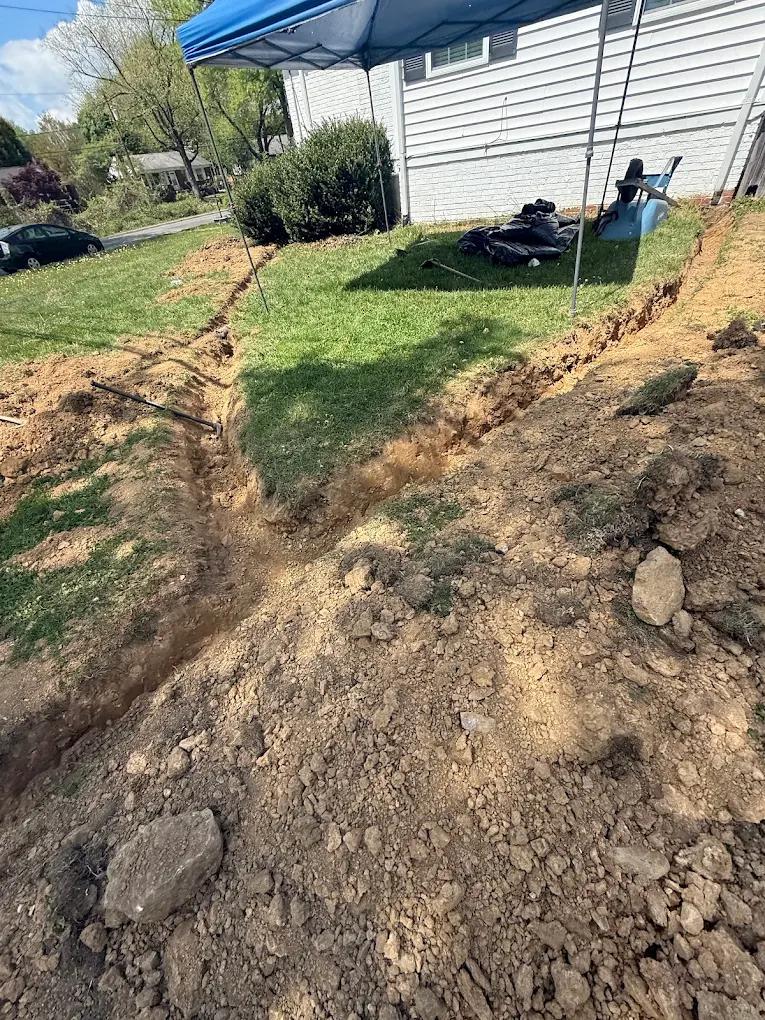
Utilities are located, trenches are cut to the planned depth and pitch, and existing landscaping in the path is set aside where it can be saved.
Step 4: Installation and testing
Basins, pipe, gravel, and dry wells are installed, downspouts are connected, and the system is run with water to confirm flow.
Step 5: Backfill and restoration
Trenches are backfilled and compacted, grade is finished, and turf or beds are restored.
Benefits & Long-Term Protection
Why This Investment Pays Off
Protects the foundation
Removing standing water near the house lowers the hydrostatic pressure that causes basement and crawlspace leaks.
A yard you can use
No more mud, mosquitoes, or dead patches in the low spots, and hardscape stops heaving from saturated soil.
Built for clay and tight lots
Our systems account for slow-draining soil, narrow side yards, and shared property lines rather than assuming an open suburban lot.
Yard Drainage FAQs

