Grading & Drainage Correction in DC and Maryland
Grade is the slope of the ground next to your house. It should fall away from the foundation so rain runs off. On older homes in Washington, DC and Maryland, decades of settlement, added patios, raised beds, and foot traffic have often reversed that slope by a few inches. A few inches is all it takes to send water toward the wall instead of away from it.
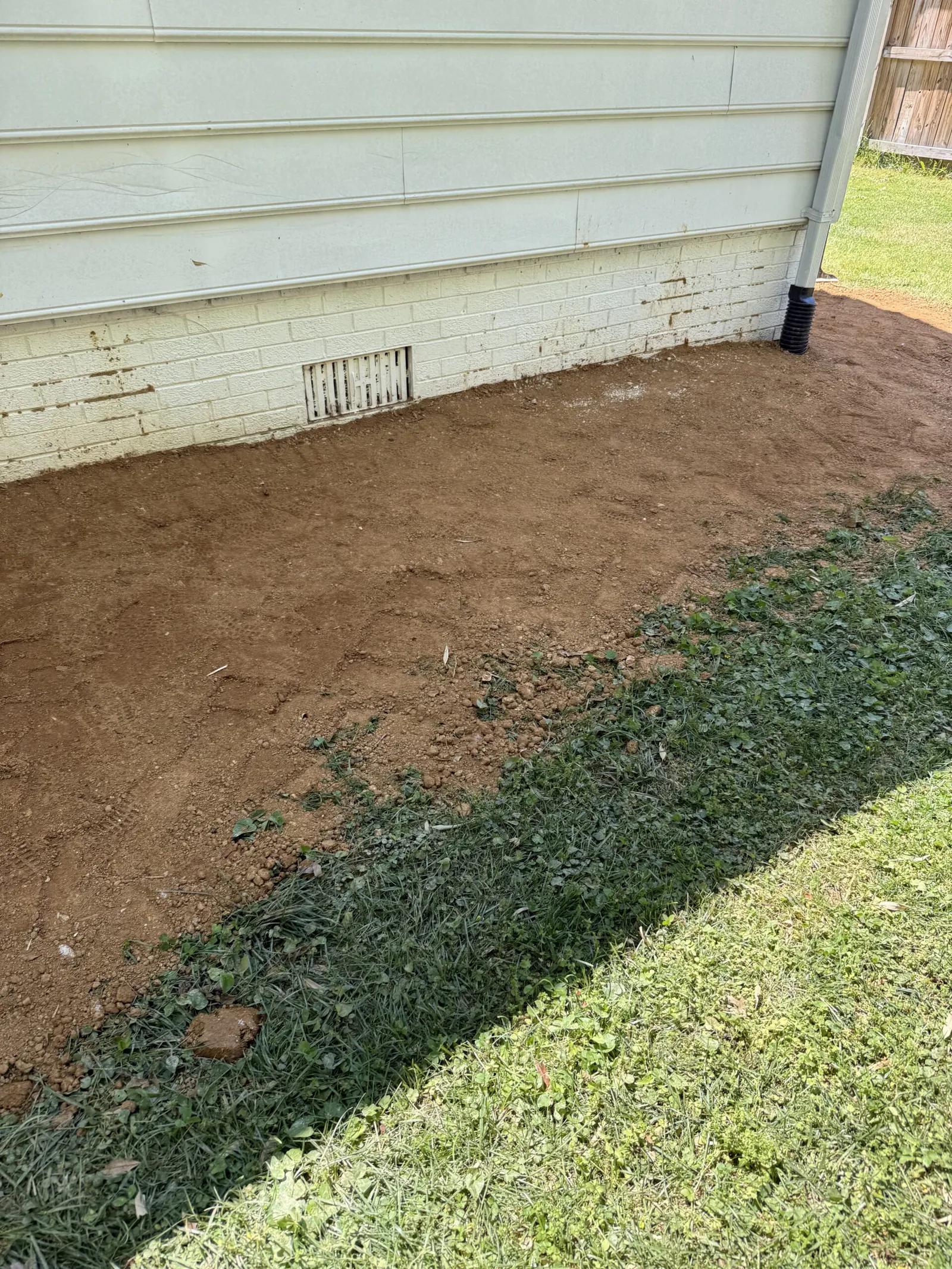
Sump Daddy corrects grading on small and medium residential lots. We add or remove soil to establish positive slope, shape swales to carry surface water around the house, build gentle berms to stop runoff from a neighbor's higher yard, and replace soil that has washed out around downspouts and window wells. We check our work with a level and a hose test, then restore the lawn with topsoil and seed or sod.
- Licensed in Maryland & DC
- Serving DC & Maryland
- One-business-day replies
- We waterproof & rebuild


Grading alone solves some problems and is part of the solution for most others. When water collects faster than clay soil can absorb it, we pair regrading with buried downspout extensions, a French drain, or a dry well. We tell you which you need and why rather than selling a full drainage system when a few yards of soil would do.
What the Service Includes
 What the Service Includes
What You Get
Every grading & drainage correction job covers these, priced in writing before we start.
Slope survey
We measure existing grade around the foundation and across the lot, identify low spots and reverse slopes, and map where surface water goes now.
Soil removal and placement
Clay fill is added and compacted to raise grade at the wall, or excess soil is removed where beds and fill have crept above the right level.
Swales and berms
Shallow graded channels and low ridges redirect surface water around structures and intercept runoff from higher ground.
Downspout and window well coordination
Grading is shaped so downspout discharge and window wells drain away, and extensions or well drains are added when needed.
Hose test of the finished grade
Before seed or sod goes down, we hose-test the new grade to confirm water flows away from the foundation rather than back toward the wall.
Lawn and bed restoration
Topsoil, seed or sod, mulch, and edging are restored so the finished yard looks intentional rather than repaired.
Our Approach
How We Handle Grading & Drainage Correction
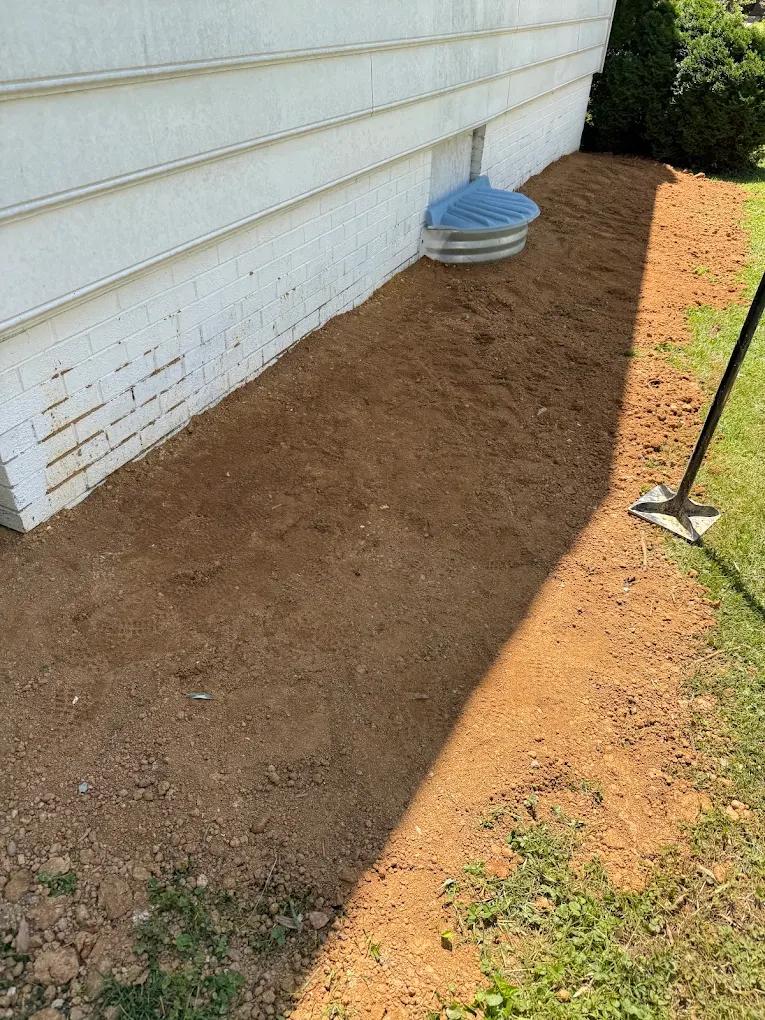
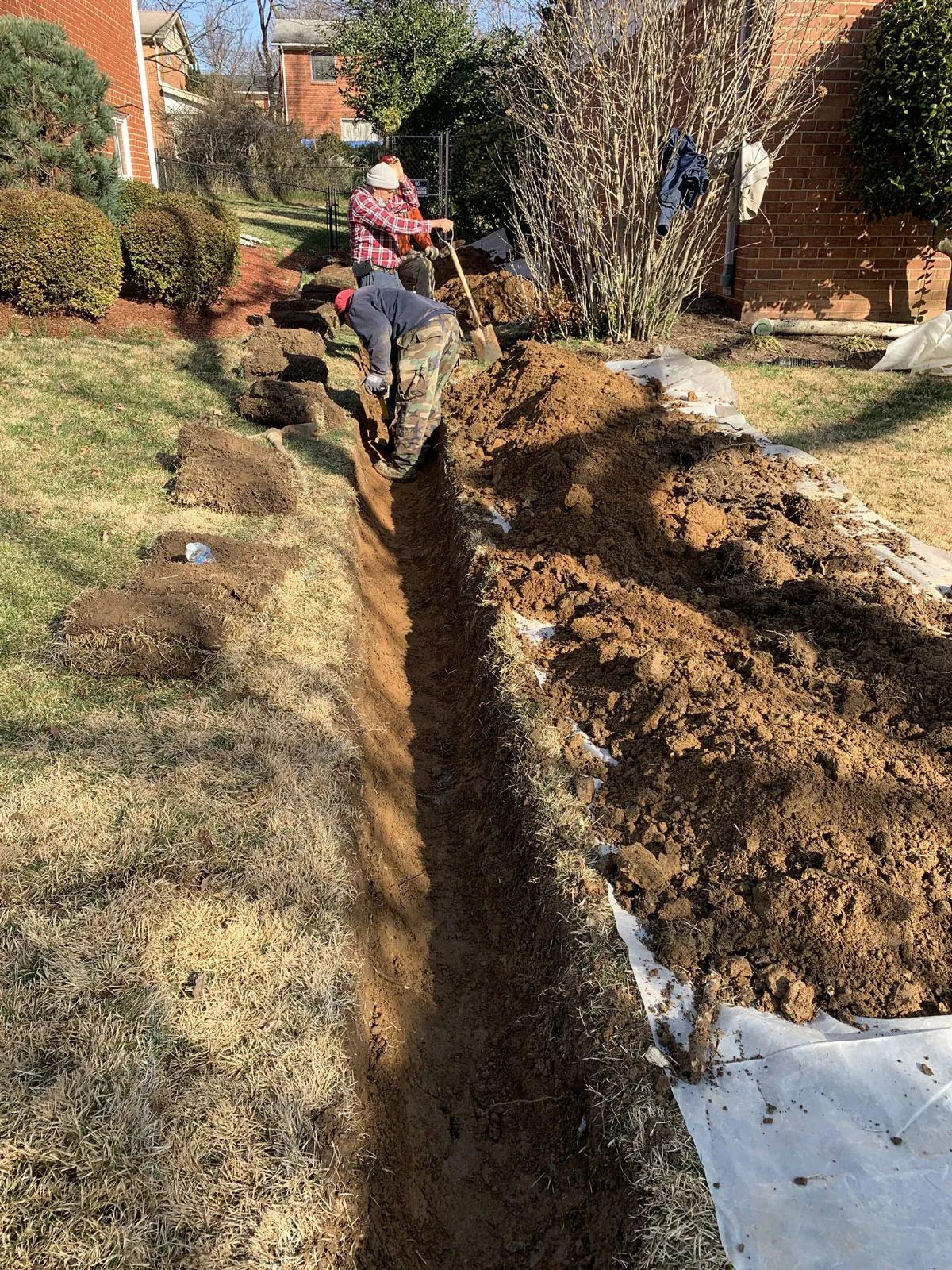
We measure the existing grade around your foundation and across the lot, find the low spots and reverse slopes, and map where surface water goes now. Then we decide where soil is added, where beds and fill have crept too high and need to come down, and whether a swale or berm is needed to catch runoff from a neighbor's yard, a driveway, or an alley.
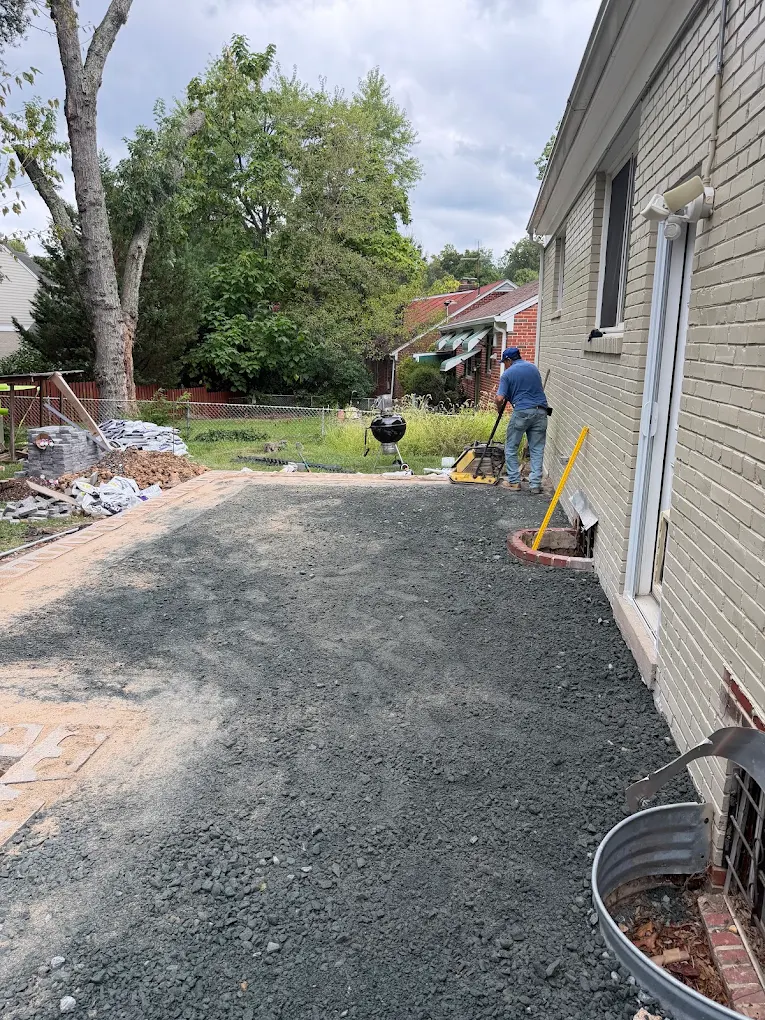
In tight side yards we work with hand tools instead of machines, placing compacted clay fill in lifts under a topsoil cap and keeping clearances below siding, framing, and brick weep holes. Your estimate shows exactly where soil moves and what gets restored, and we hose-test the finished grade to confirm water flows away before seed or sod goes down.
Signs You May Need This Service
When to Call About Grading & Drainage Correction
- The ground next to the foundation is level or slopes toward the house.
- Soil has settled in a trough along the foundation wall or around a patio or addition.
- Water runs toward the house from a neighbor's yard, a driveway, or an alley.
- Mulch beds against the house sit higher than the surrounding lawn and hold water.
- The basement leaks on the side of the house where the yard is flat or sloped inward.
- Window wells fill with water because the surrounding grade drains into them.
How It Works
Our Grading & Drainage Correction Process
Step 1: Evaluation
A technician checks slope with a level, inspects for settlement and runoff paths, and confirms grading is a cause of the water problem.
Step 2: Grading plan and estimate
The written estimate shows where soil will be added or removed, any swales or berms, how downspouts and wells are handled, and restoration.
Step 3: Regrading
Soil is placed and compacted in lifts to the designed slope, using machines where there is access and hand tools in tight side yards.
Step 4: Testing and restoration
We hose-test the new grade to confirm water flows away, then finish with topsoil and seed or sod.
Benefits & Long-Term Protection
Why This Investment Pays Off
Stops water at the simplest point
Correcting slope keeps surface water from ever reaching the foundation, which is the least expensive waterproofing there is.
Protects foundations and hardscape
Dry, stable soil at the wall reduces hydrostatic pressure and the heaving and settling that damage walks and patios.
Low-impact on tight lots
We regrade narrow side yards and small urban lots by hand when necessary so the fix does not require tearing up the whole yard.
Grading & Drainage Correction FAQs