Concrete Slab & Stair Repair in DC and Maryland
Concrete is part of nearly every waterproofing job we do. Interior drains require cutting the slab and pouring it back. Sump pits are set in concrete. Exterior steps, areaways, and basement entrances are where water collects and where concrete fails first. Our crews mix and finish concrete in basements every week, so repairing it is work we know well.
Sump Daddy repairs basement slabs that have cracked, heaved, or settled, patches floors opened by plumbers or previous contractors, and rebuilds exterior concrete stairs, stoops, and areaway floors that have cracked or pulled away from the house. When the concrete failed because of water, which is often, we address the drainage at the same time so the new work does not fail the same way.
- Licensed in Maryland & DC
- Serving DC & Maryland
- One-business-day replies
- We waterproof & rebuild


This is repair and replacement of residential slabs and stairs in Washington, DC and Montgomery and Prince George's counties. It is not structural foundation work; if a slab has dropped because the soil beneath it has washed out or the foundation is moving, we tell you that and recommend a structural engineer before any concrete is poured.
What the Service Includes
 What the Service Includes
What You Get
Every concrete slab & stair repair job covers these, priced in writing before we start.
Slab assessment
We determine why the concrete failed: shrinkage, water under the slab, washed-out base, or a prior patch done poorly.
Basement slab repair and replacement
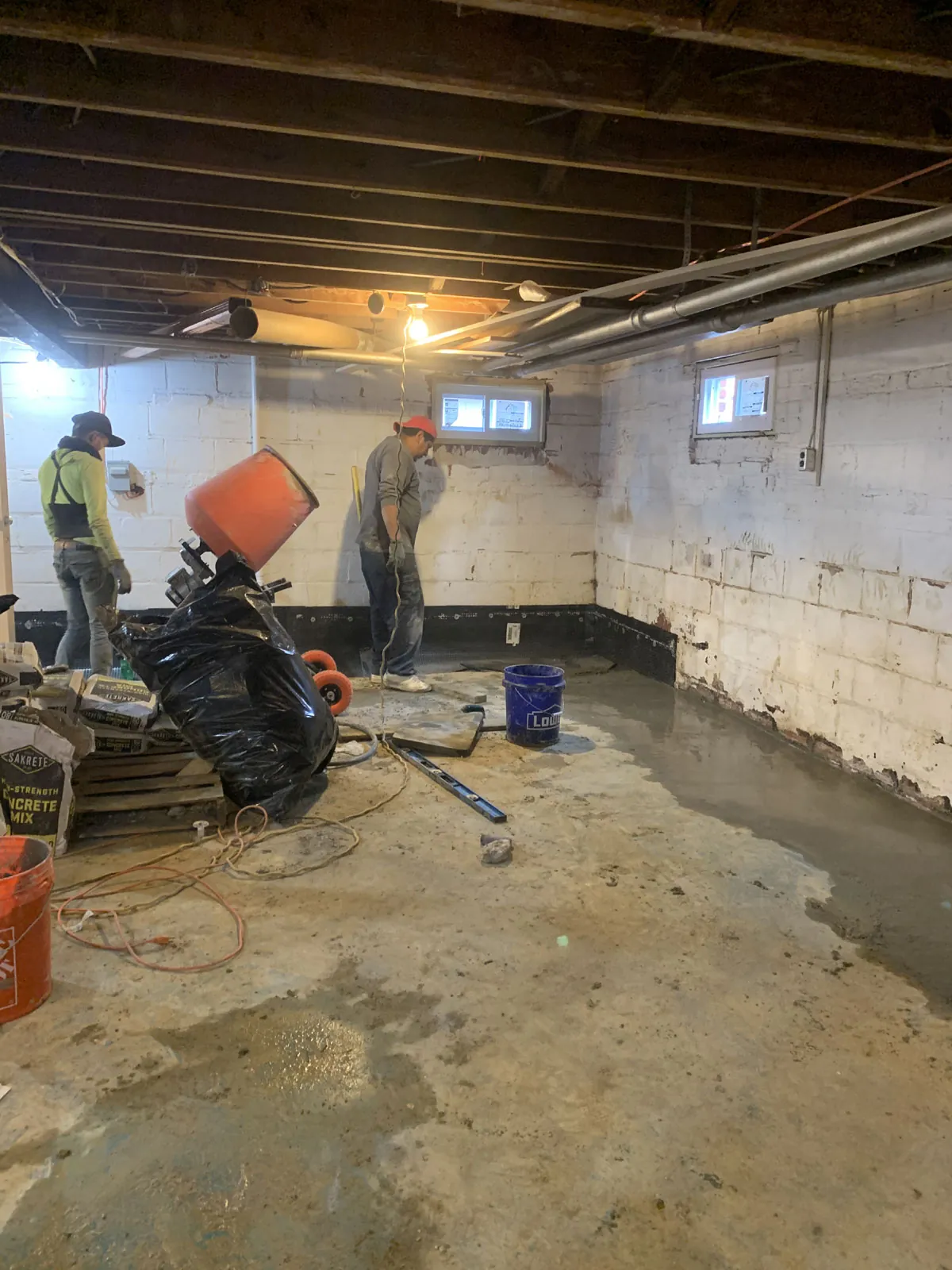
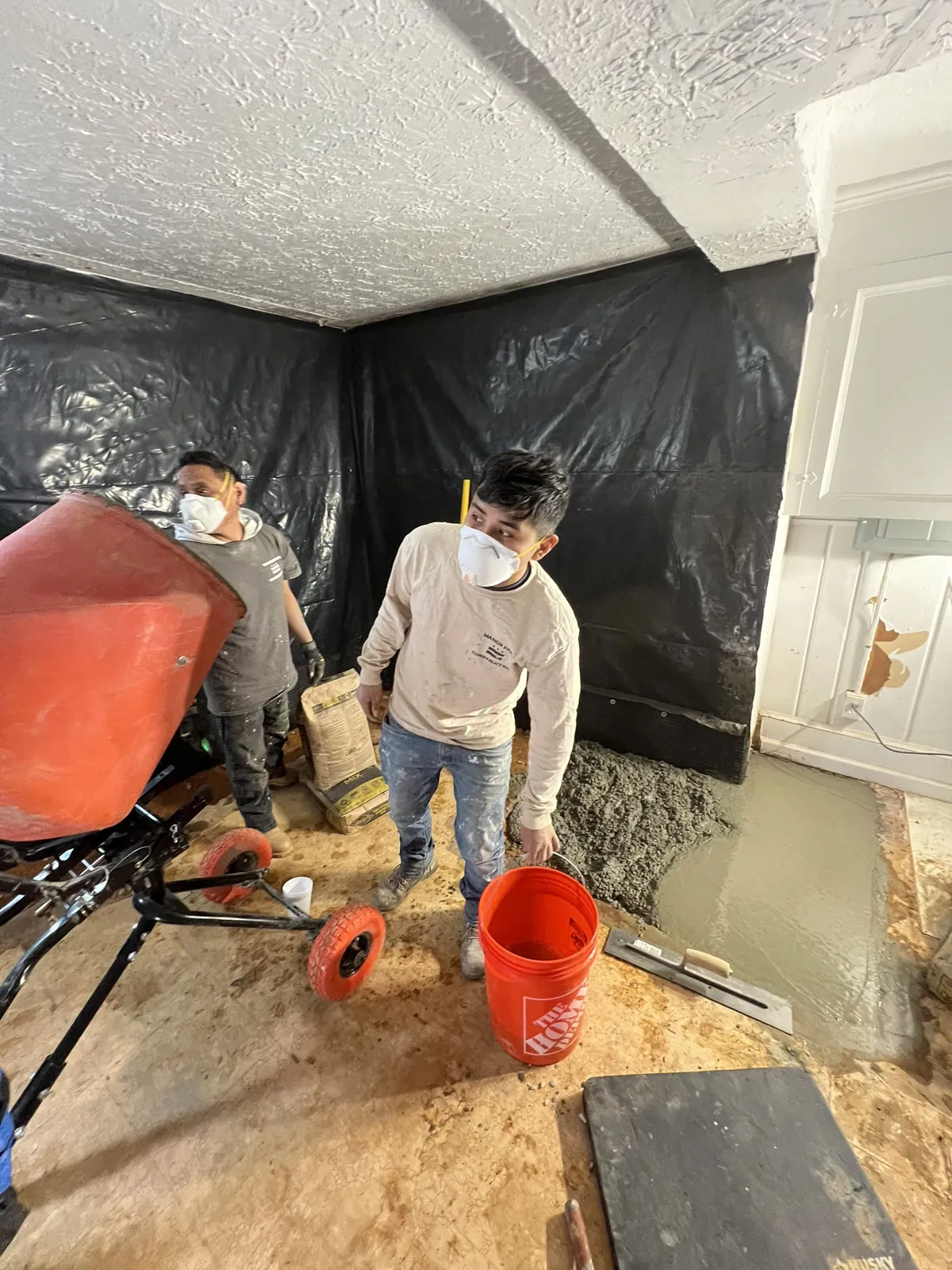
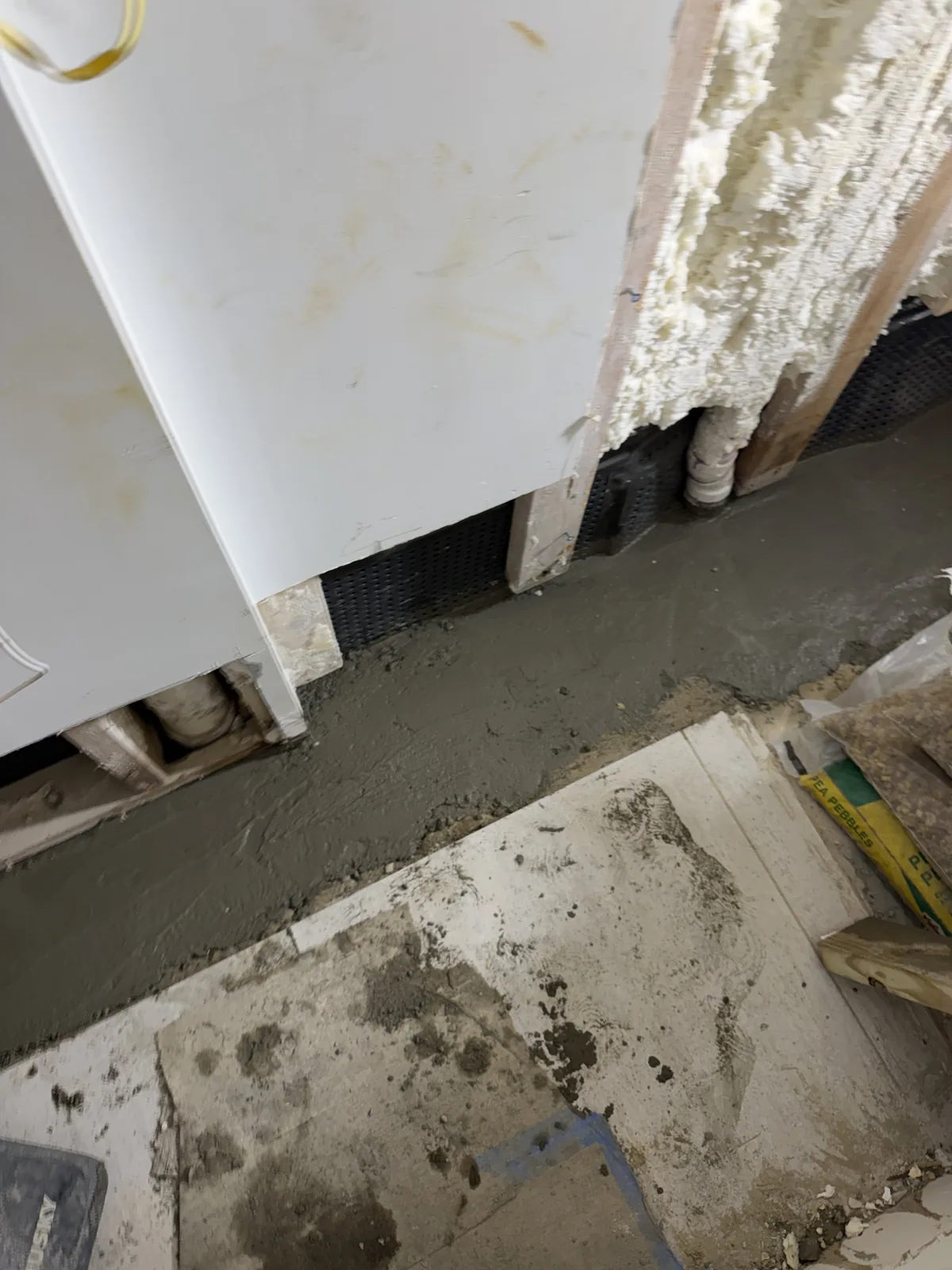
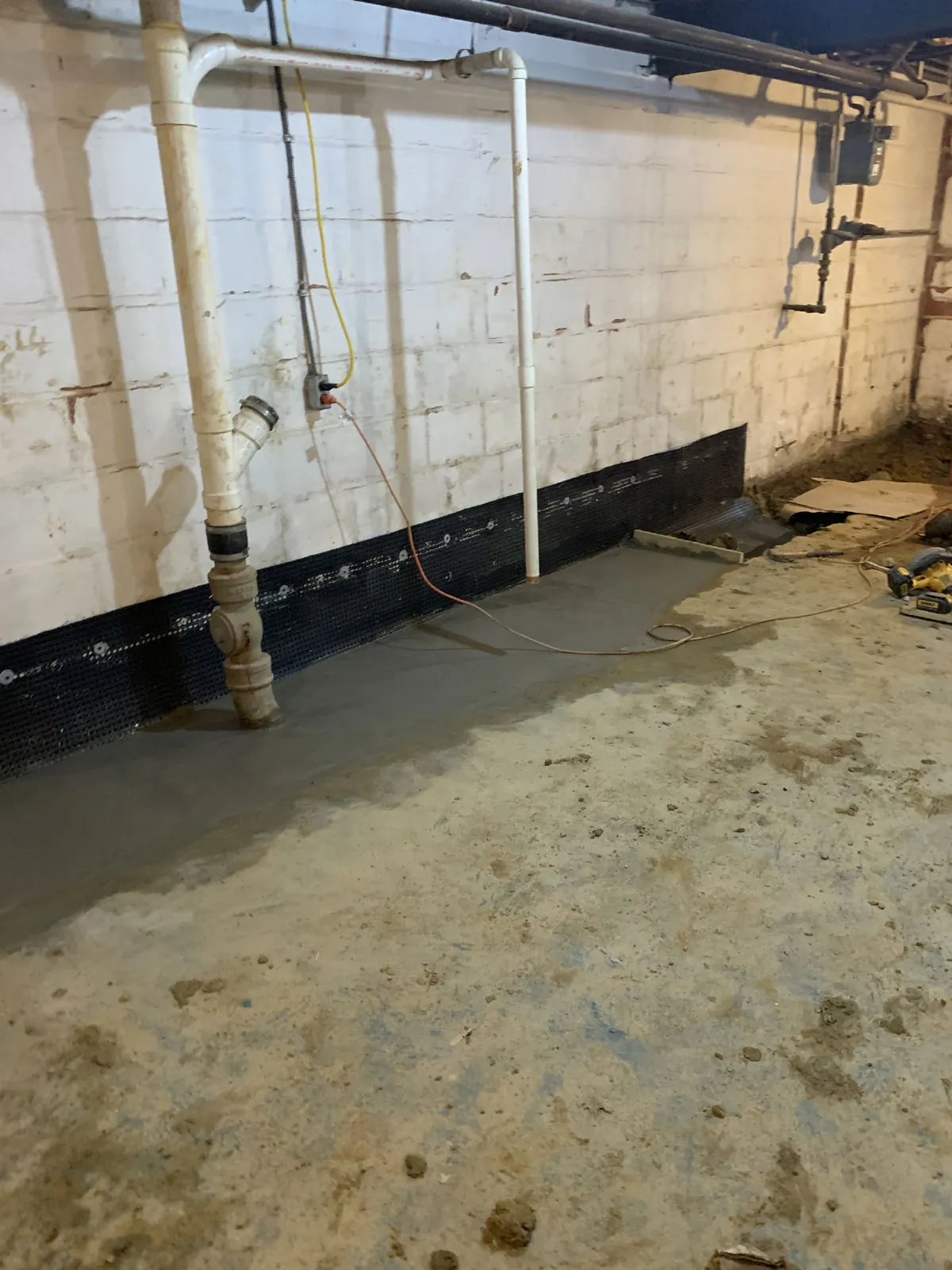
Failed sections are cut out, the base is compacted and leveled, a vapor barrier is placed, and new concrete is poured and finished flush.
Patching after drainage or plumbing work
Open trenches from our drain installation or another trade's work are closed with properly bedded, finished concrete.
Exterior stair and stoop repair
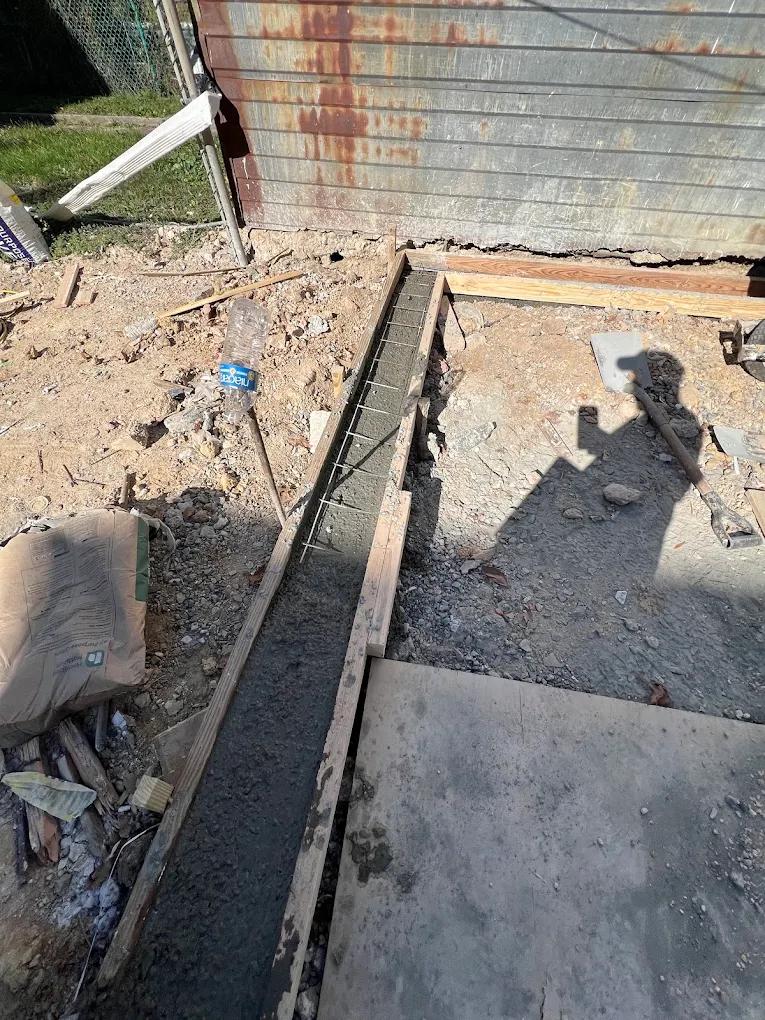
Cracked or settled steps are repaired or rebuilt with correct riser height, tread slope, and drainage away from the door.
Areaway and basement entrance floors
Areaway slabs are repaired or replaced and pitched to a drain so water stops collecting at the lowest door in the house.
Curing protection and finishing timeline
New concrete is protected while it cures, and we give you a timeline for walking on it and finishing over it, coordinating with SD Restorations if flooring is part of the project.
Our Approach
How We Handle Concrete Slab & Stair Repair
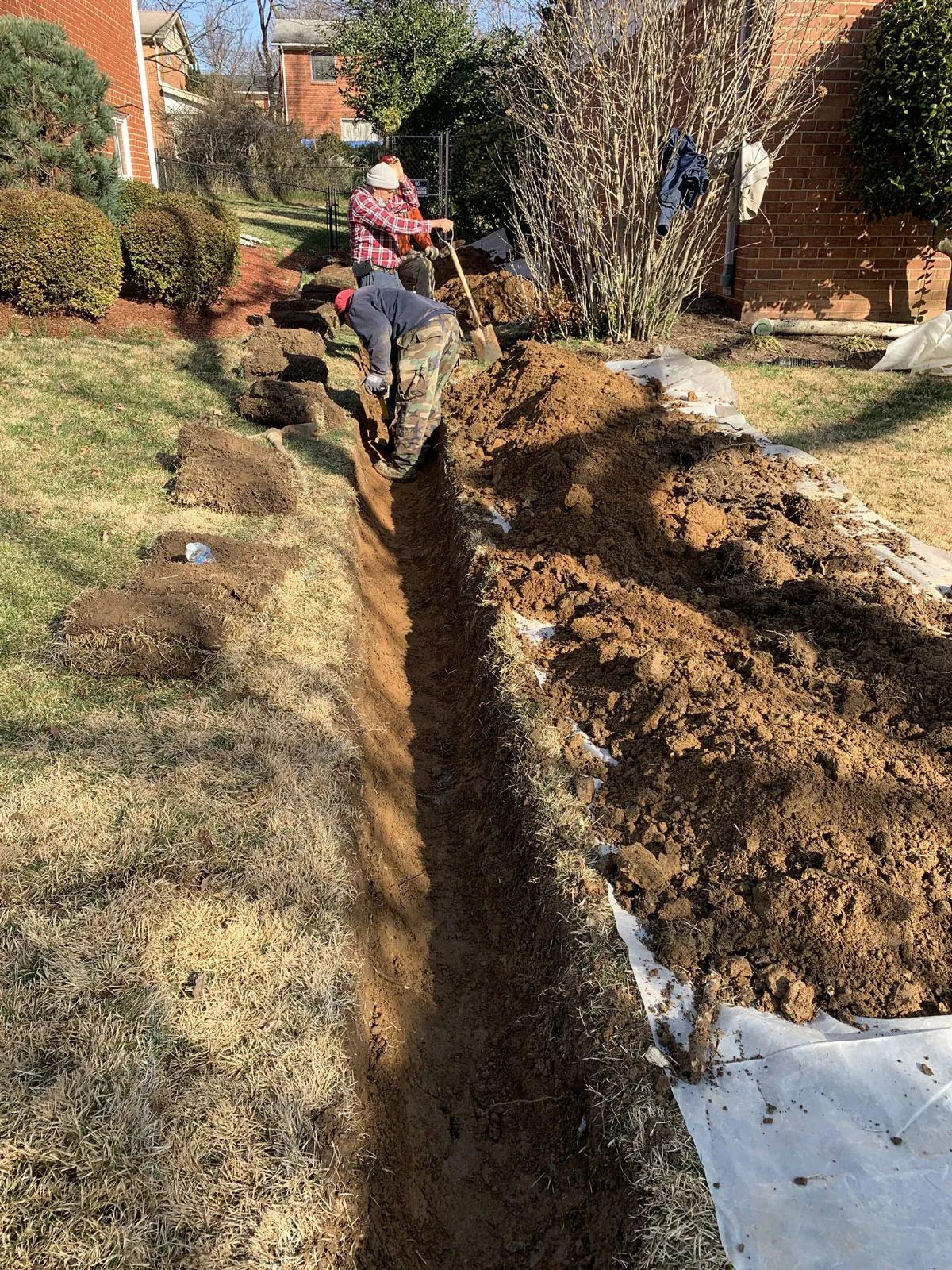
Before we pour, we work out why your concrete failed: shrinkage, water under the slab, a washed-out base, or an old patch done poorly. If water is the cause, drainage gets corrected first so the new slab does not crack again. If the slab dropped because the foundation is moving, we stop and recommend a structural engineer. When an open trench runs along a leaking wall, we can turn it into a drain.
Failed concrete is cut out, the base is compacted and leveled, and a vapor barrier goes down before the new pour. Basement patches are finished flush so flooring can go directly over them. Exterior steps are rebuilt with correct riser height and tread slope, and areaways are pitched to a drain. We protect the concrete while it cures and give you a timeline for walking on it and finishing over it.
Signs You May Need This Service
When to Call About Concrete Slab & Stair Repair
- Cracks in the basement floor that are widening or that weep water.
- A section of slab that has sunk below the rest or heaved upward.
- A rough, unfinished concrete patch from an earlier plumbing or drain job.
- Exterior steps that have cracked, tilted, or separated from the house.
- Crumbling or spalling concrete on a stoop, areaway, or basement entrance.
- Water pooling on exterior steps or in an areaway and running toward the basement door.
How It Works
Our Concrete Slab & Stair Repair Process
Step 1: Inspection and cause review
We inspect the concrete, check for water beneath or beside it, and decide whether drainage needs to be corrected before repair.
Step 2: Written estimate
The estimate defines the area to be removed and replaced, base preparation, drainage work if any, finish, and warranty.
Step 3: Removal and base preparation
Failed concrete is cut and removed, the base is compacted and graded, and any drain or vapor barrier is installed.
Step 4: Pour, finish, and cure
Concrete is placed, finished to match the surrounding surface or the stair profile, and protected while it cures.
Benefits & Long-Term Protection
Why This Investment Pays Off
Repairs that last
Correcting the water problem beneath or beside the concrete means the new slab or step does not crack again next spring.
A floor ready for finishing
Patches are poured flush and finished smooth so flooring can go down directly over them.
Safer entrances
Rebuilt steps with even risers and water pitched away from the door are safer and keep the basement entrance dry.
Concrete Slab & Stair Repair FAQs