Leak Diagnosis in DC and Maryland
Water on a basement floor can come from a dozen places: a downspout emptying at the corner, a reverse slope in the yard, a clogged footing drain, a failed sump pump, a crack in the wall, groundwater rising under the slab, or a window well with no drain. Each one has a different fix, and treating the wrong one wastes money while the real problem continues.
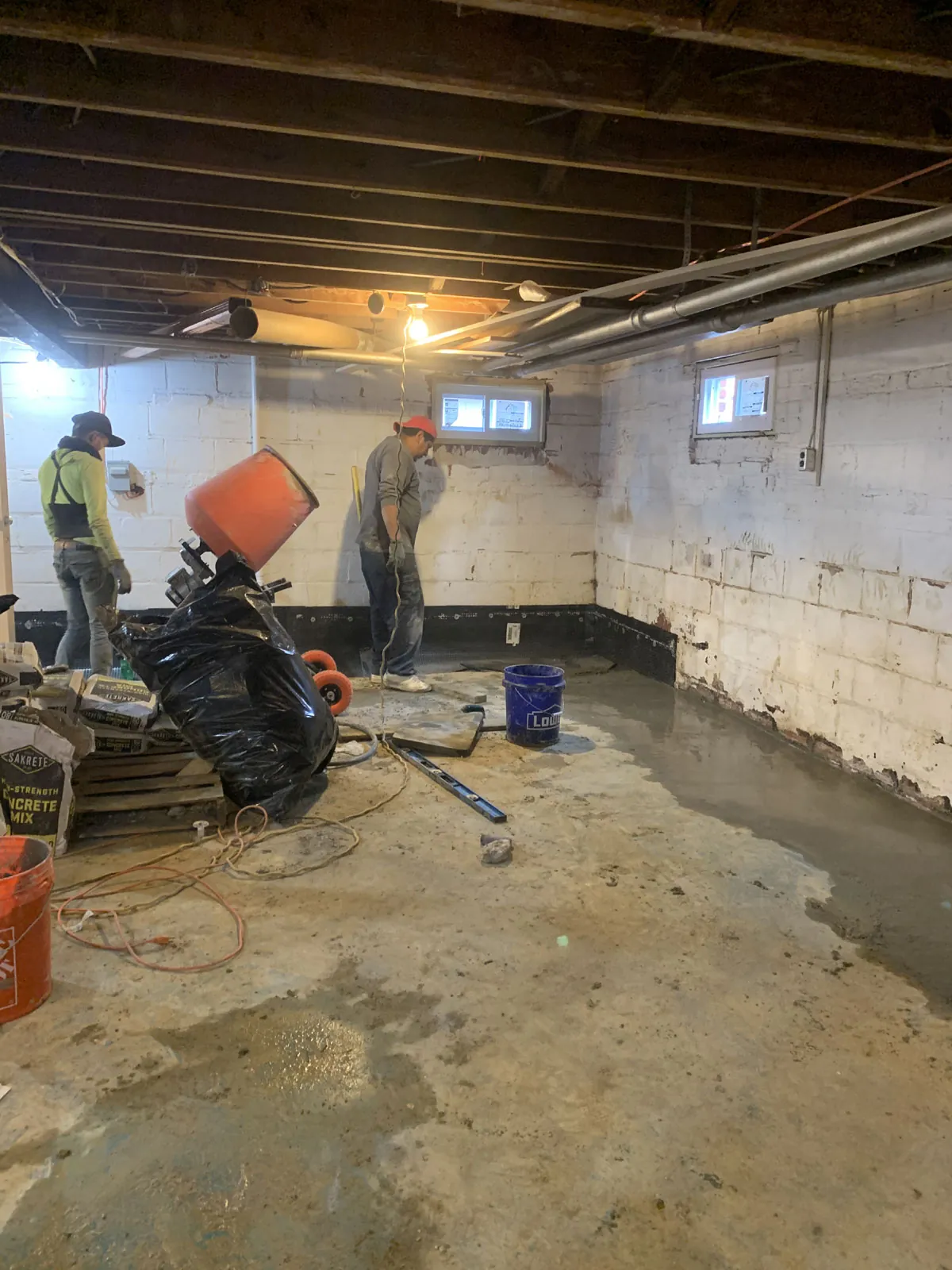
Sump Daddy's leak diagnosis is a methodical inspection of how water reaches your house. We start outside, checking roof drainage, grading, window wells, and the discharge of any existing systems. Then we inspect the foundation inside and out, trace stains and mineral deposits, test suspect areas with water, and run a camera through drainage lines, downspout lines, footing drains, and sump discharge lines when the problem may be underground.
- Licensed in Maryland & DC
- Serving DC & Maryland
- One-business-day replies
- We waterproof & rebuild


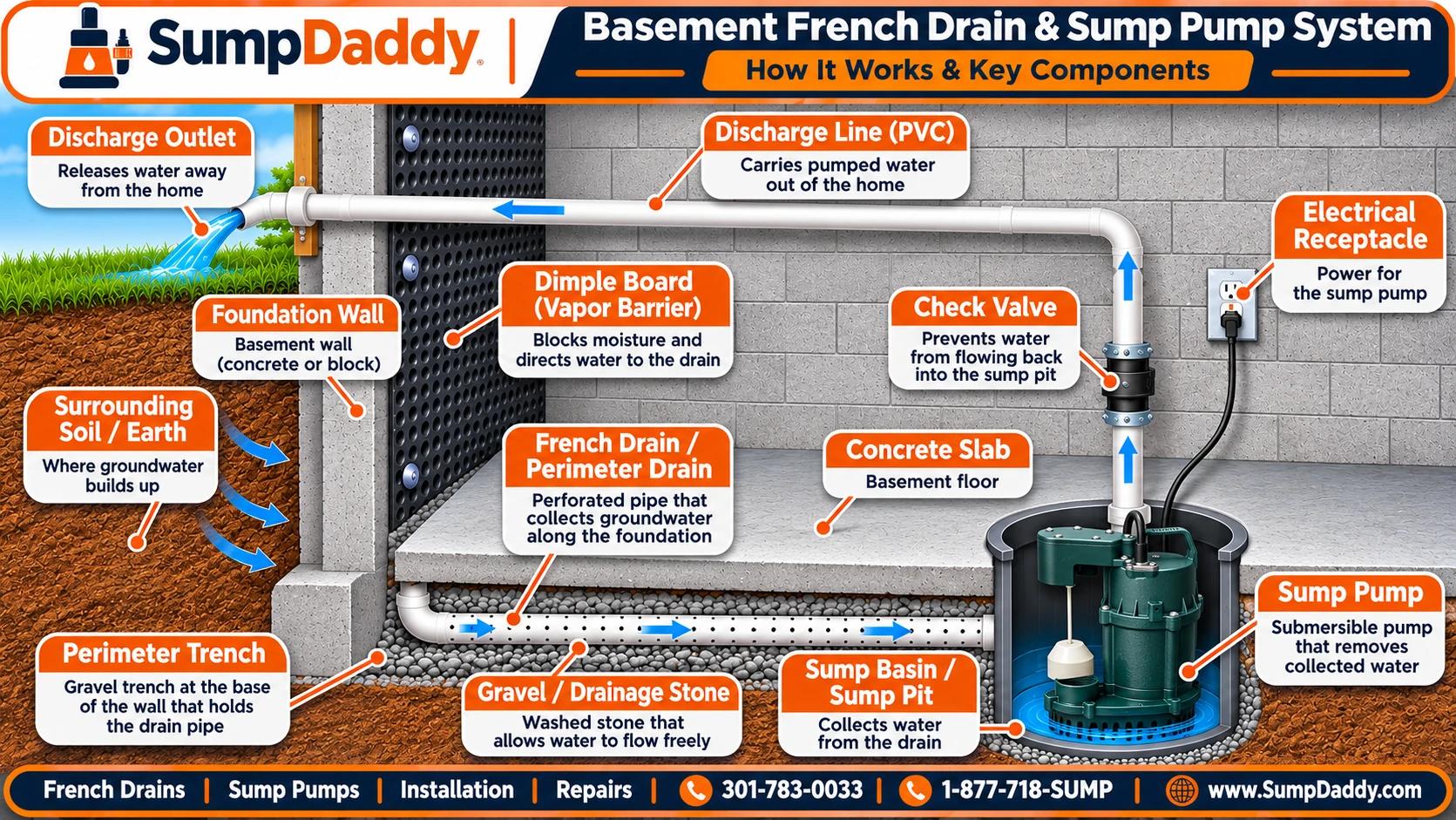
Our scope is water intrusion from outside the house. We do not diagnose municipal sewer lines or interior plumbing leaks; if the evidence points to a supply or waste pipe, we tell you so you can call a plumber. What you get from us is a clear explanation of where the water comes from and a written set of options, from a downspout extension to a full drainage system, with the reasoning behind each.
What the Service Includes
 What the Service Includes
What You Get
Every leak diagnosis job covers these, priced in writing before we start.
Exterior water path review
Gutters, downspouts, grading, window wells, hardscape, and neighboring runoff are checked to see how surface water reaches the foundation.
Interior foundation inspection
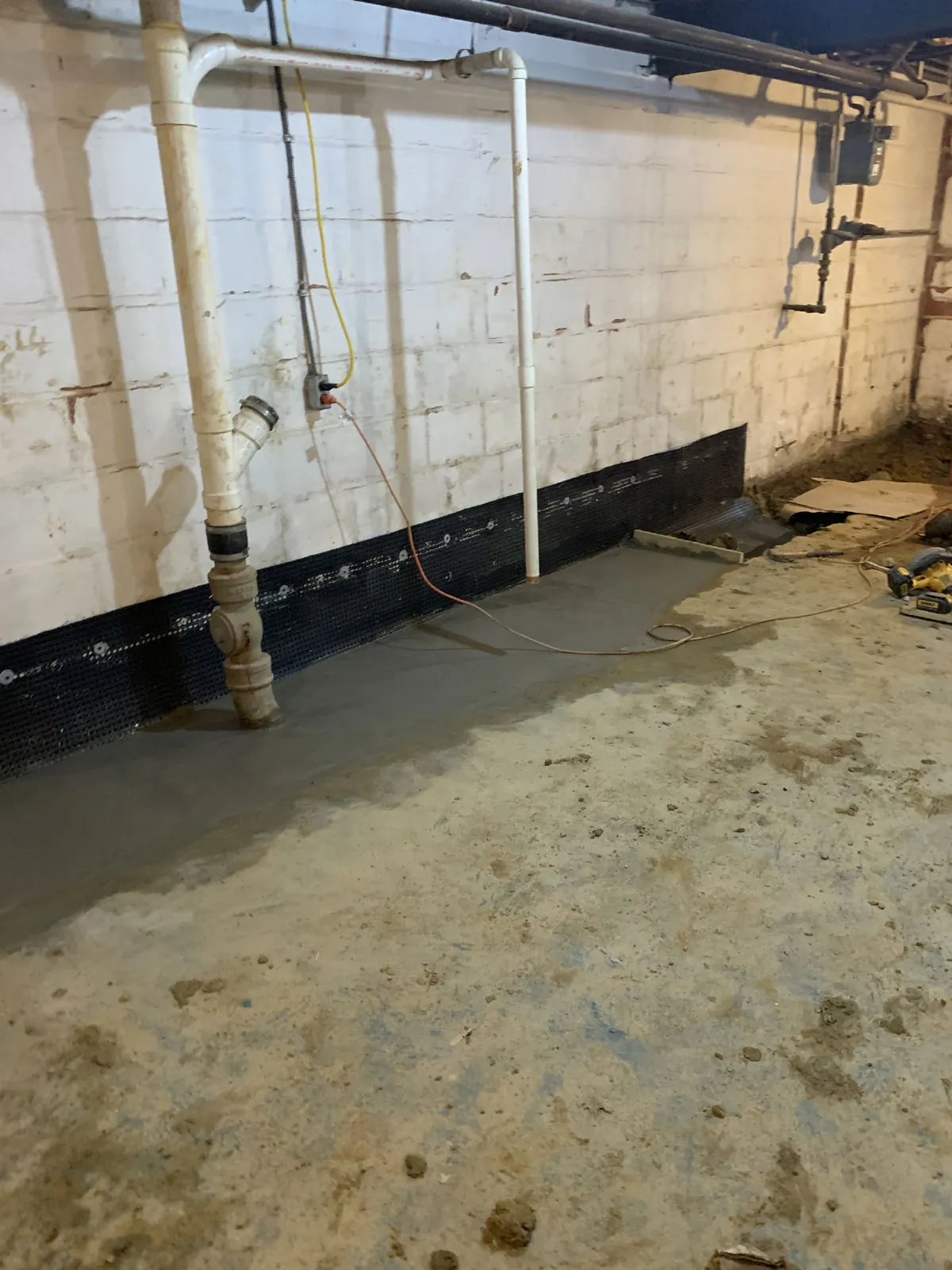
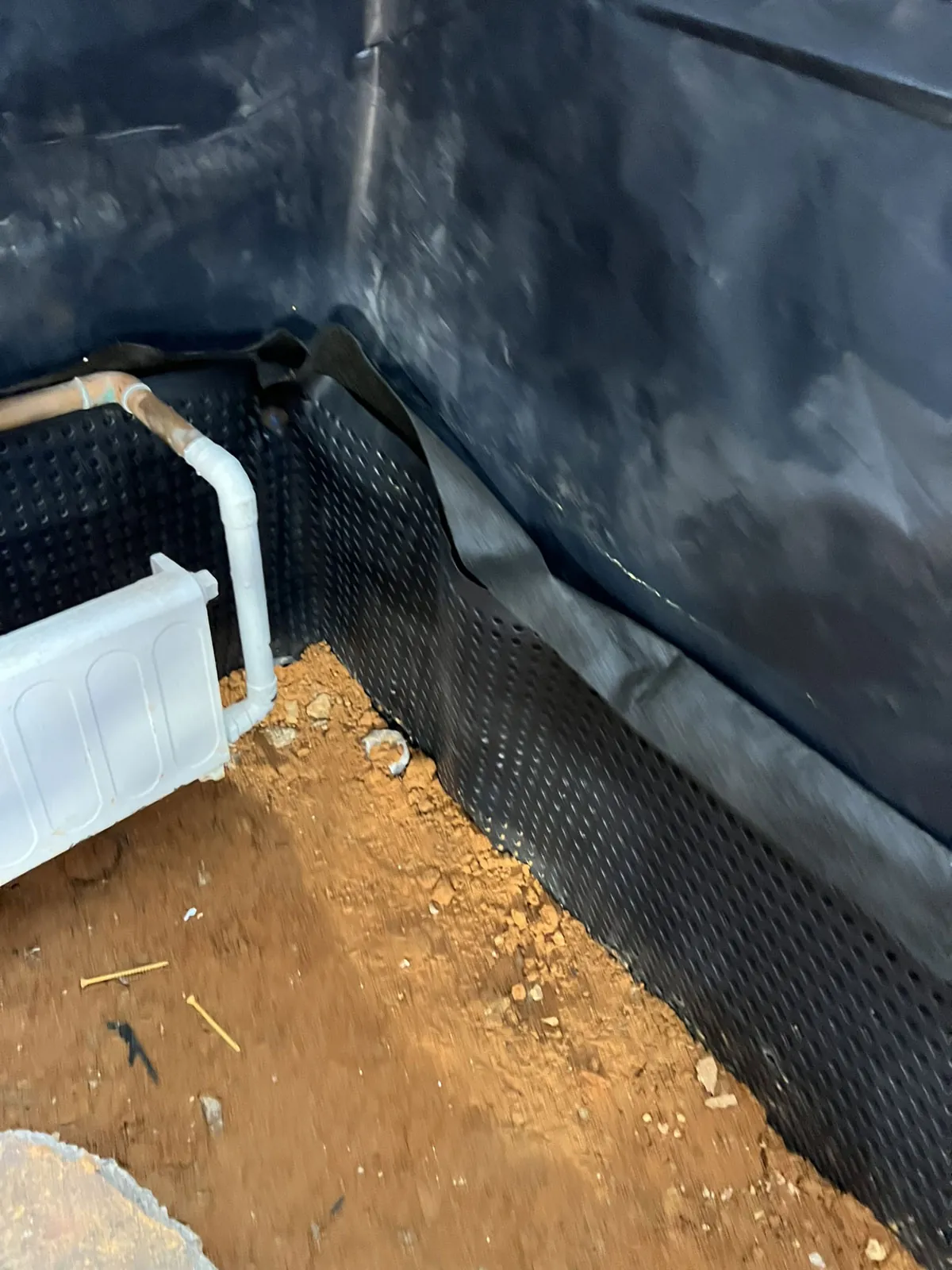
Walls, floor, cove joint, cracks, and existing systems are examined, and staining and mineral deposits are read for the water's path and history.
Water testing
Where the source is unclear, we introduce water at suspect points outside and watch for entry inside to confirm the path.
Camera inspection of drainage lines
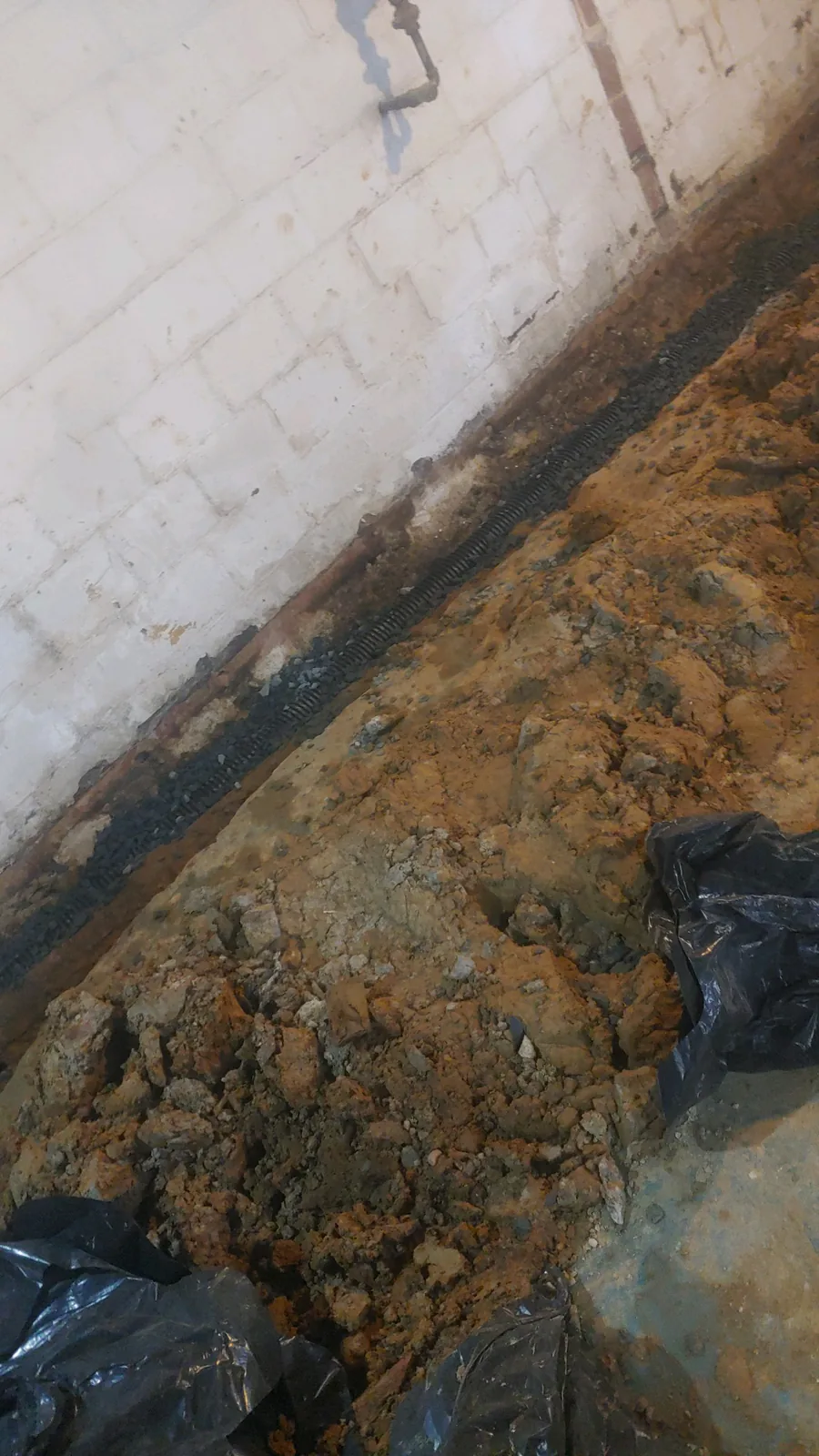
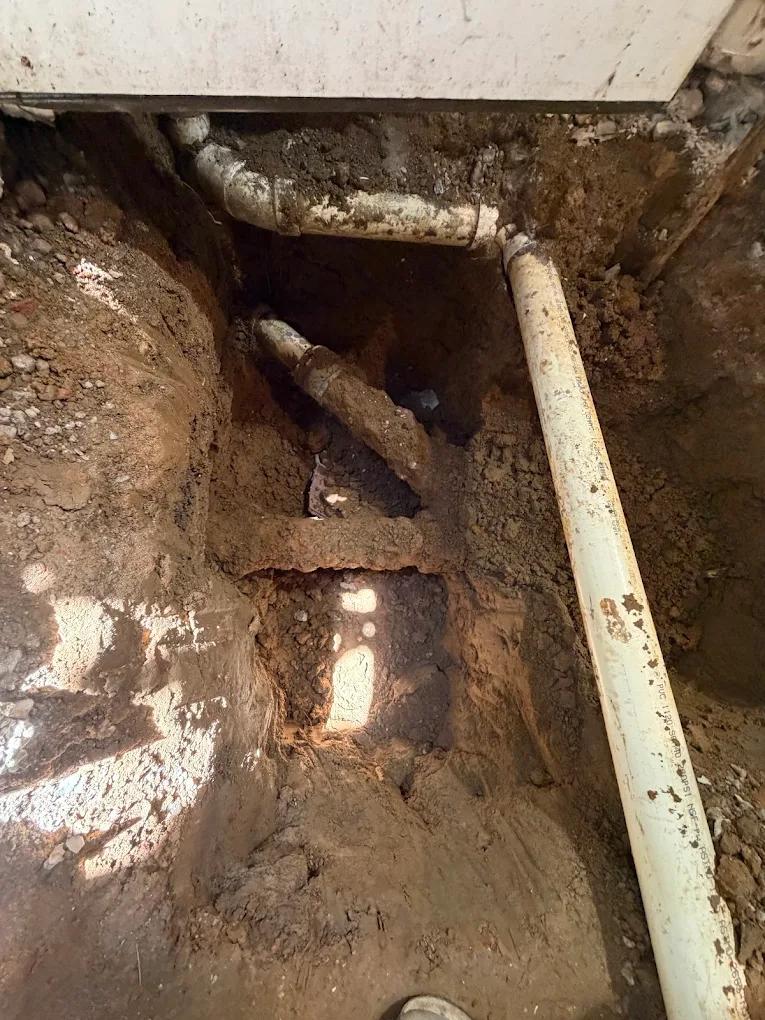
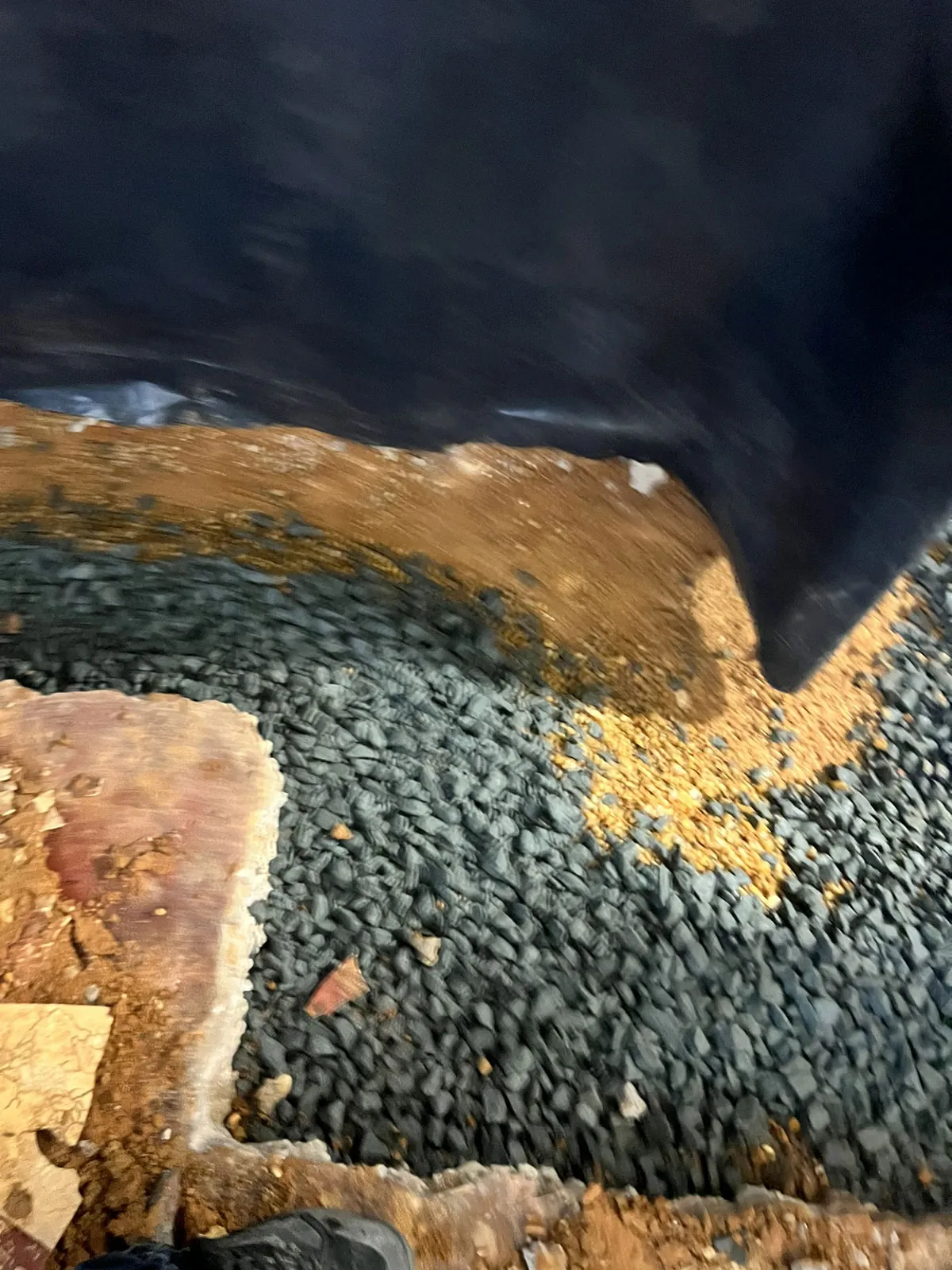
Footing drains, interior drain pipe, buried downspout lines, and sump discharge lines are inspected by camera to find clogs, breaks, and dead outlets.
Plumbing sources flagged right away
Our scope is water from outside the house. If the evidence points to a supply or waste pipe, we tell you right away so you can call a plumber instead.
Written findings and options
You receive a plain-language explanation of the source and a set of options ranked from the simplest fix to a full system, with estimates for each.
Our Approach
How We Handle Leak Diagnosis
We plan the visit around what you tell us about where and when water appears and what has already been tried. A technician walks the outside of the house first, then inspects the basement or crawlspace with those findings in mind. Timing and location tell most of the story: surface water shows up during or right after rain, while groundwater arrives hours later at the cove joint or floor cracks.
Where the pattern is not obvious, we run a hose at a suspect point outside and watch for entry inside, and we camera underground lines when they may be involved. If the evidence points to plumbing, we tell you right away. We show you the evidence, explain what it means, and hand you written options from the simplest fix to a full system, with no obligation to hire us.
Signs You May Need This Service
When to Call About Leak Diagnosis
- Water appears in the basement but you cannot tell where it is coming in.
- Leaks happen only in certain storms or only in some seasons.
- A previous repair did not stop the water, or the water moved to a new location.
- Stains, efflorescence, or peeling paint show water movement but the wall is dry when you look.
- You are buying or selling a home and need an honest read on a basement moisture history.
- An existing sump, drain, or waterproofing system is in place and the basement is still wet.
How It Works
Our Leak Diagnosis Process
Step 1: Tell us what you are seeing
When you request the inspection, describe where and when water appears and what has been tried, which helps us plan the visit.
Step 2: Exterior and interior inspection
A technician walks the outside of the house first, then inspects the basement or crawlspace with the exterior findings in mind.
Step 3: Testing and camera work
Suspect areas are water-tested and underground lines are camera-inspected as needed to confirm the source rather than guess at it.
Step 4: Findings review and options
We explain what we found, show you the evidence, and provide written options and estimates so you can decide what to do next.
Benefits & Long-Term Protection
Why This Investment Pays Off
Fix the cause, not the symptom
Knowing whether water comes from the roof, the yard, or the ground beneath determines the right repair, and the wrong one solves nothing.
Spend only what the problem requires
Many leaks trace back to a downspout or a grade problem that costs a fraction of an interior drain system.
Clear options, no pressure
You get findings and choices in writing, explained by a professional, and time to decide.
Leak Diagnosis FAQs