Gutters & Downspouts in DC and Maryland
Many wet basements start at the roofline. A clogged gutter spills over the edge and dumps water right at the foundation. A downspout that ends in a short elbow saturates the soil at a corner, and the water follows the foundation wall down to the footing. The basement leaks, and the homeowner looks for the problem below ground when the fix was ten feet above it.
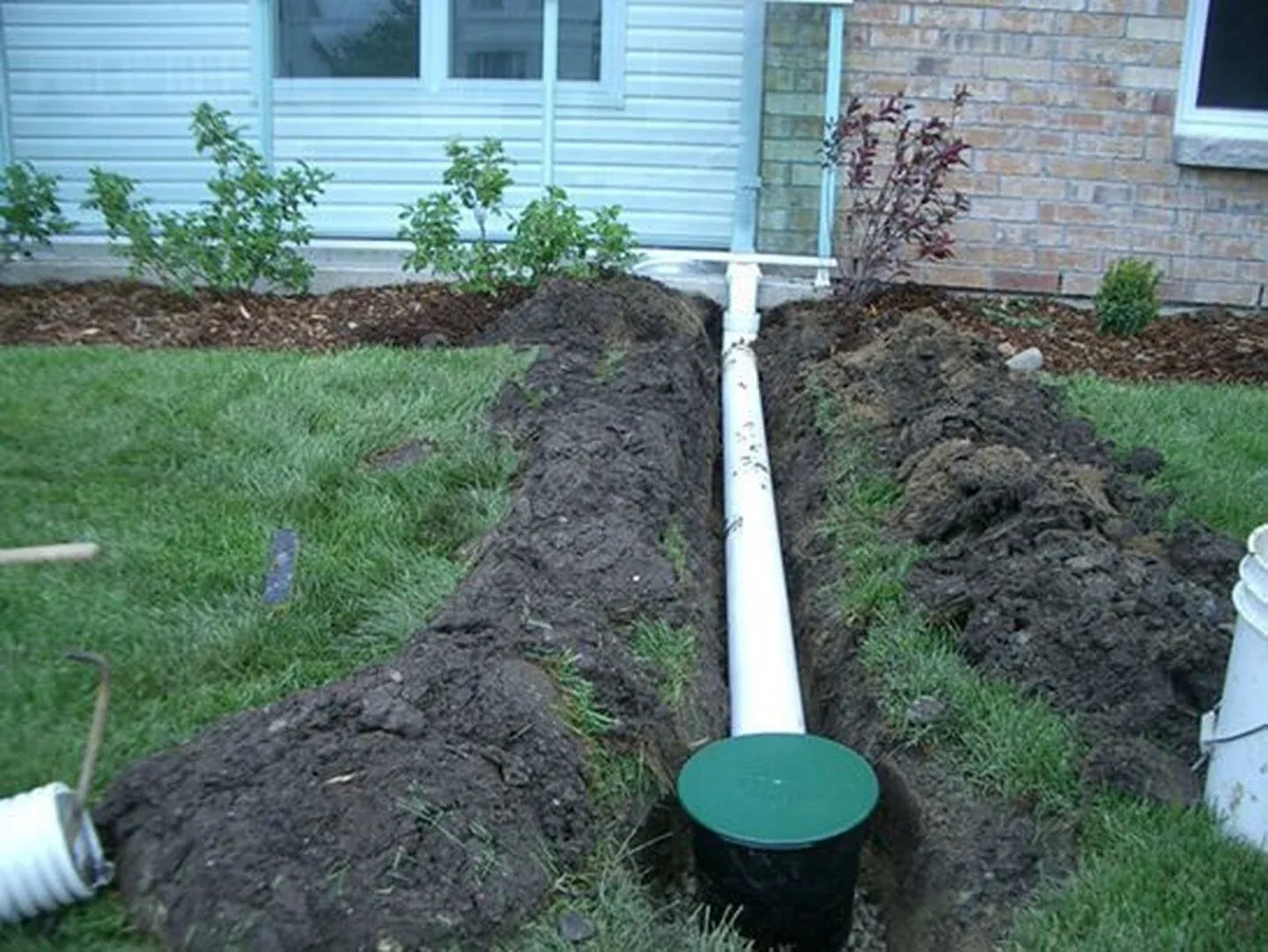
Sump Daddy treats gutters and downspouts as part of the waterproofing system. We repair sagging and leaking gutters, replace undersized or failed sections with seamless aluminum, add leaf guards where trees are the problem, and extend downspouts to carry roof water away from the house. Buried extensions in solid pipe with a pop-up emitter or a connection to a dry well keep the discharge out of sight and off the lawn.
- Licensed in Maryland & DC
- Serving DC & Maryland
- One-business-day replies
- We waterproof & rebuild


On every basement inspection we check the gutters first, because correcting a downspout is far less expensive than an interior drain. If the downspouts are the cause, we say so. If they are one piece of a larger problem, we fix them as part of the overall plan.
What the Service Includes
 What the Service Includes
What You Get
Every gutters & downspouts job covers these, priced in writing before we start.
Itemized written scope
We match each gutter run and downspout to the symptom below it, and your written scope separates repairs, replacements, and extensions so you can see what each part addresses.
Gutter inspection and tune-up
We check pitch, hangers, seams, and outlets, then realign, re-hang, reseal, and clear as needed so water actually reaches the downspouts.
Gutter and downspout replacement
Failed runs are replaced with seamless aluminum gutter sized for the roof area, with downspouts upsized where the roof sheds more than the existing ones carry.
Leaf guards
Screen or mesh guards reduce clogging under trees, which are the main reason gutters fail in older DC and Maryland neighborhoods.
Surface downspout extensions
Rigid extensions and splash blocks move discharge several feet from the wall where burying is not practical.
Buried downspout drains
Solid pipe with a cleanout at the downspout carries water underground to a pop-up emitter, daylight, or a dry well, routed around roots, utilities, and footings.
Our Approach
How We Handle Gutters & Downspouts
We examine every gutter run and downspout and match each one to a symptom below it, such as a leak at a corner of the basement or a washed-out bed. That tells us whether a gutter needs to be re-pitched, resealed, or replaced, whether a downspout should be upsized for the roof area it serves, and whether leaf guards make sense given the trees over your house.
For each downspout, we decide between a surface extension and a buried line based on roots, utilities, budget, and how far the water needs to go. Buried lines are pitched downhill in solid pipe with a cleanout and routed around footings to a pop-up emitter, daylight, or a dry well. Your written scope separates repairs, replacements, and extensions so you can see what each part addresses.
Signs You May Need This Service
When to Call About Gutters & Downspouts
- Water pours over the gutter edge during rain or drips from seams and corners.
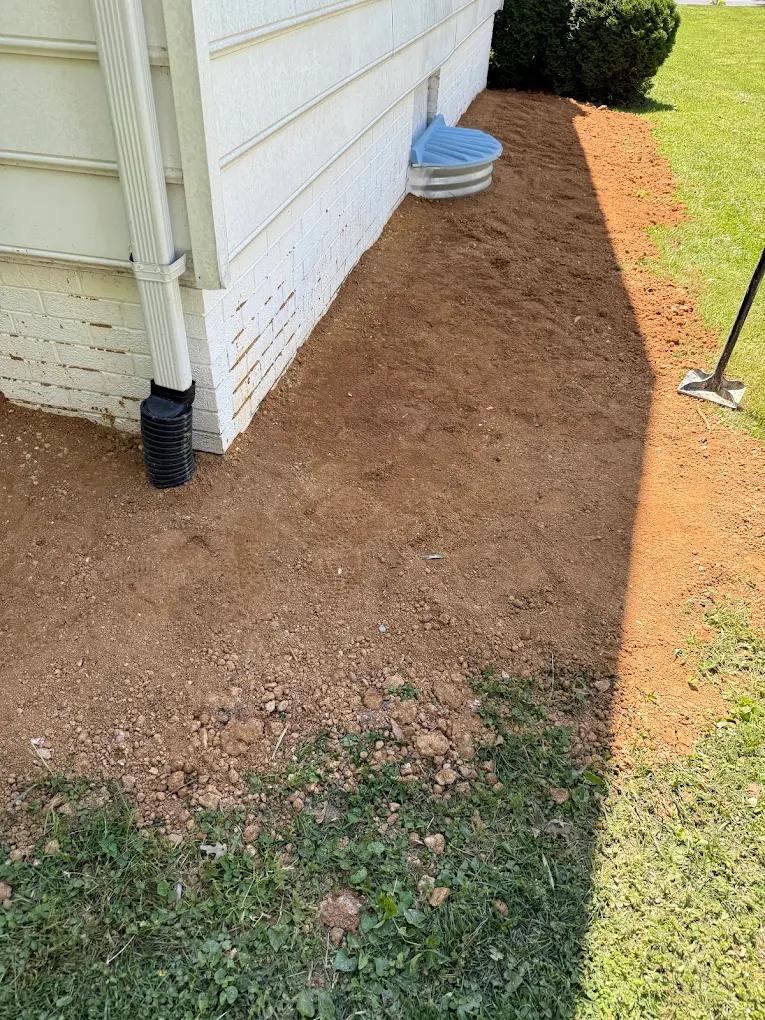
- Downspouts end within a foot or two of the foundation or onto a splash block that has shifted.
- Soil is eroded or a trench has formed beneath a downspout outlet.
- Basement leaks appear at the corners of the house directly below downspouts.
- Gutters sag, pull away from the fascia, or hold standing water after rain.
- Mulch, leaves, or ice build up in the gutters every season.
How It Works
Our Gutters & Downspouts Process
Step 1: Roofline and discharge inspection
We examine every gutter run and downspout, note where water is overflowing or discharging, and match each problem to a basement or yard symptom.
Step 2: Recommendation and estimate
You receive a written scope that separates repairs, replacements, and extensions so you can see what each part addresses.
Step 3: Gutter work
Repairs or replacements are completed, pitch is set toward the outlets, and guards are installed if included.
Step 4: Extension installation
Surface extensions are fitted, or trenches are cut and solid pipe is laid with cleanouts and emitters, then backfilled and restored.
Benefits & Long-Term Protection
Why This Investment Pays Off
Removes the biggest water source
Roof runoff is often the largest volume of water reaching the foundation, and redirecting it is the most cost-effective waterproofing step there is.
Protects other systems
Keeping roof water out of the soil reduces the load on sump pumps, French drains, and footing drains so they last longer.
Stops erosion and staining
No more washed-out beds, splashed siding, or streaks on the foundation wall under each downspout.
Gutters & Downspouts FAQs